Should you eat back exercise calories? No — here's why
It feels like the most logical thing in the world. Your watch or calorie app — MyFitnessPal is the classic example — says today's walk burned 300 calories, so you've "earned" 300 more to eat. It even does the math for you: goal 2,300 — ate 1,000 — exercise +300 — 1,600 remaining.
That little "+300" is one of the most effective diet-sabotage mechanisms ever put on a home screen. Here's what's actually wrong with it.
Problem 1: the burn is double-counted
When you got your calorie goal — from a calculator or from the app's setup wizard — you picked an activity level: sedentary, lightly active, moderately active. That multiplier was supposed to already include your movement. Your walks, your workouts, your errands — they're baked into the goal.
So when the app then adds today's walk on top as bonus calories, the same activity gets counted twice: once inside the goal, once as "earned" exercise. Both errors point the same direction — eat more — and together they can quietly erase most of the deficit you think you're holding.
Problem 2: the burn number is a guess anyway
Device and app estimates of exercise burn are notoriously optimistic — often by 30–50% or more. Worse, they only see the exercise itself, not what your body does afterwards: many people unconsciously move less for the rest of the day after a workout, giving back part of the burn. The "300 calories" on your screen is the least trustworthy number in your entire log.
Problem 3: the app spends your progress for you
Look again at that home screen: 1,600 remaining. No context, no reminder that 300 of it is a speculative exercise bonus. Just a bigger budget, presented as fact. If you eat to it — and the interface is inviting you to — the walk becomes calorie-neutral. You did the one thing that widens a deficit, and your app's response was to spend it on your behalf. The effort happened; the progress didn't.
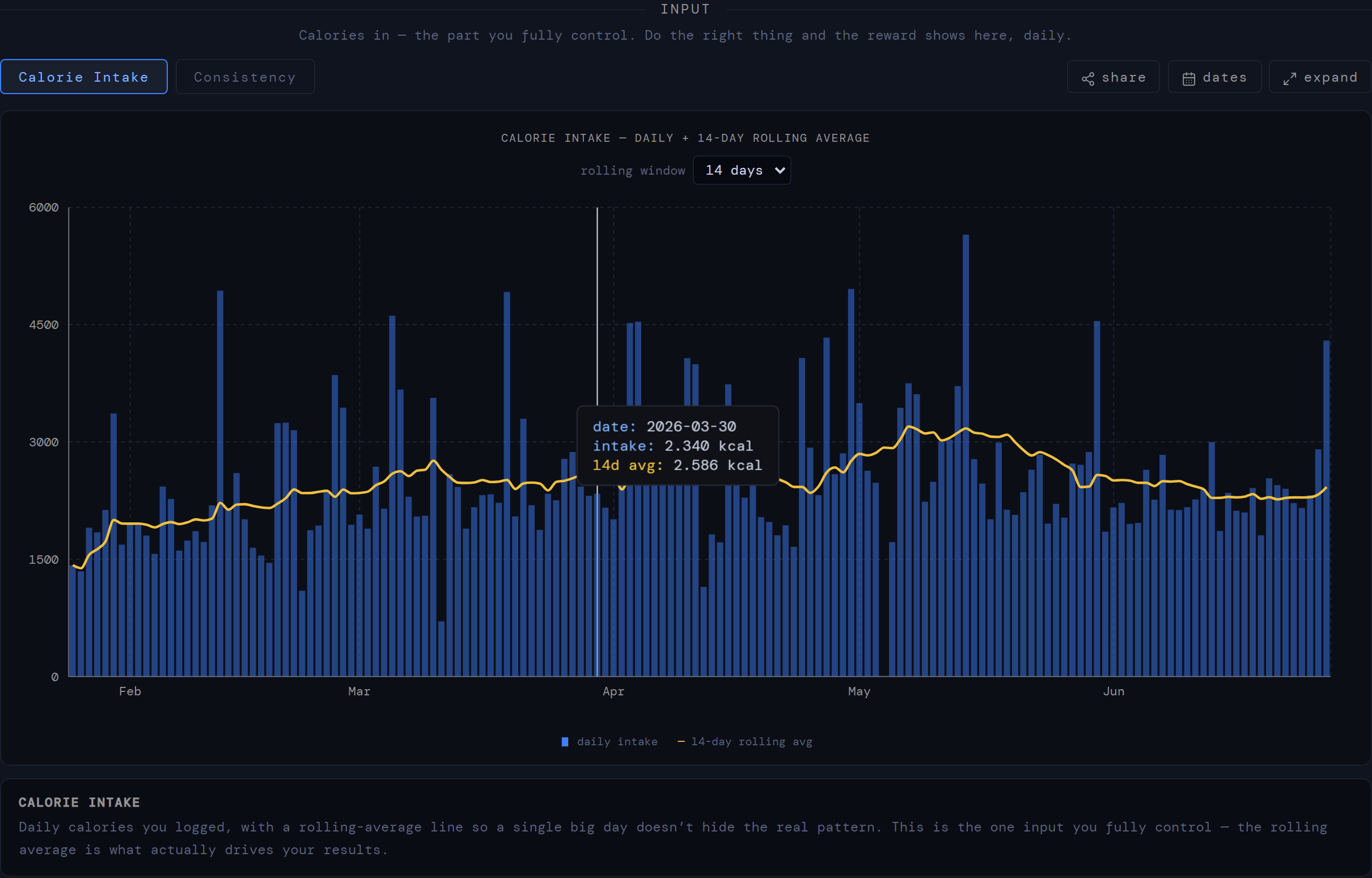
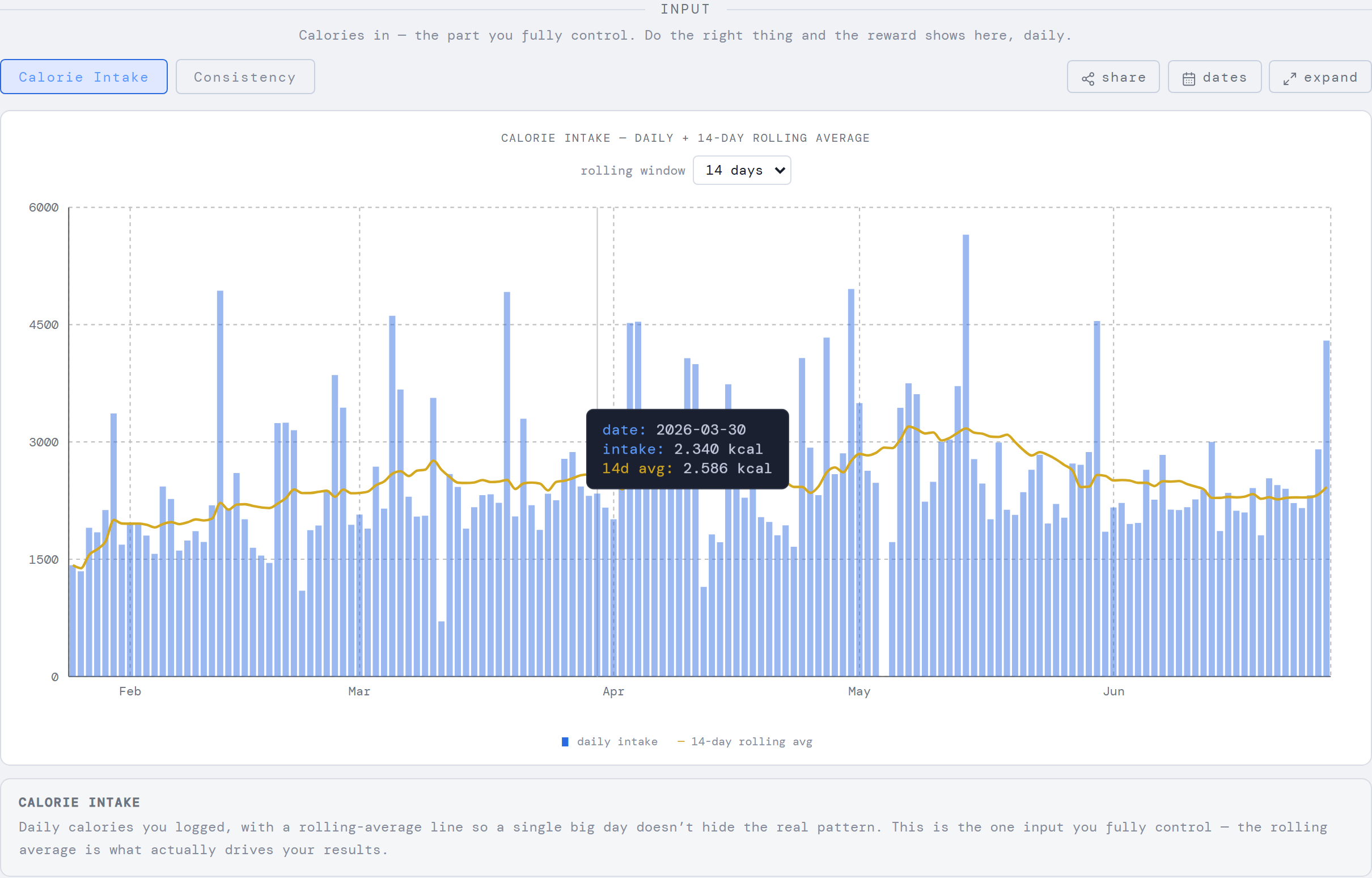
No eat-back budget anywhere: you log what you ate, and the deficit is measured against your real burn — exercise already included, because it shows up in the trend.
What to do instead: weeks, not days
There's a calmer way to handle activity, and it requires less work, not more:
Stop settling the books daily. Let your activity average into your real burn.
Over weeks of logging weight and calories, everything you do — the workouts, the fidgeting, the lazy Sundays, the days you walked without noticing — shows up in one honest number: your true average expenditure. You don't need to estimate any single walk, because they're all already in there.
Then you set your deficit against that average and simply live it: the same intake every day, whether you exercised or not. A walk doesn't buy dessert; it banks progress. A rest day doesn't demand penance; it's already priced in. No daily negotiation, no eating back, no phantom calories.
This is also the honest answer to the anxiety underneath the whole question — "but if I don't eat them back, am I under-eating on training days?" Across a week, your average intake against your average burn is what determines your result. One day's swing is noise. The pattern is the signal.
The takeaway
- Your calorie goal already includes your activity — eating back exercise counts it twice.
- Exercise-burn numbers from devices are guesses, and generous ones.
- A budget that grows when you move teaches you to undo your own progress.
- Hold one steady intake against your real average burn, measured over weeks — and let every walk count for what it was.
Metabolistic measures your true average burn from weeks of your own data — activity included, nothing double-counted — so you can set one deficit and just live it.